Introduction
Skin tags are extremely common and, in most cases, harmless. Even so, many people are unsure what to do when one appears, changes, or becomes irritating. Questions often arise about whether removal is necessary, whether it is safe to wait, and why skin tag removal is usually classed as cosmetic rather than medical care in the UK. Without clear information, it is easy to feel uncertain or to assume that action is required when it may not be.
Understanding suitability is important because removal, while generally minor, is still a procedure with considerations regarding diagnosis, healing, and cosmetic outcome. Knowing when removal is reasonable and when it offers little benefit helps people avoid unnecessary intervention while still recognising when professional advice is appropriate. It also helps set realistic expectations about what removal can and cannot address.
This guide outlines the key factors that determine whether a skin tag is suitable for removal. It explains common scenarios in which removal is considered, when it may be advisable for reassurance, and when a cautious, watchful approach is appropriate. It also covers how personal priorities, skin type, and UK healthcare pathways shape decision-making.
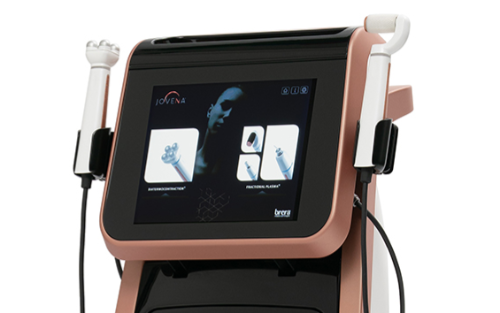
Jovena Fractional Plasma
Skin tag removal may be a straightforward procedure, but how the tissue is treated can make a meaningful difference to both outcomes and patient experience. That’s where fractional plasma technology on the Jovena device offers a more considered approach.
By delivering controlled plasma energy in precise micro-points, the treatment works within the upper layers of the skin to target the concern while leaving surrounding tissue largely unaffected. This supports a natural repair response, encouraging cleaner healing and more refined results over time.
For clinics, Jovena provides a versatile platform that extends beyond simple lesion removal into broader skin renewal and resurfacing treatments. For patients, it offers a precise, controlled option that aligns removal with overall skin quality - not just resolution of the concern.
Visit Website
Understanding What Makes A Skin Tag Suitable For Removal
Skin tags are very common, benign skin growths, and decisions about their removal are usually based on comfort, reassurance, or practical considerations rather than medical necessity. For many people, understanding this distinction helps reduce unnecessary worry and supports a more confident, measured decision.
Skin tags are a benign and non-urgent condition
Skin tags are benign, meaning they are not cancerous and do not pose a health risk in most cases.
- They typically grow slowly and remain harmless over time.
- They do not usually require treatment unless they cause symptoms or concern.
- Monitoring a stable skin tag is often a safe and appropriate option.
This reassures many people who worry that leaving a skin tag untreated could lead to a problem developing. In the absence of change or symptoms, doing nothing is medically acceptable.
Why suitability for removal is about context, not necessity
Whether a skin tag is suitable for removal depends on individual circumstances rather than a fixed medical rule.
- Removal is often considered when a skin tag causes irritation, catches on clothing, or affects daily comfort.
- Some people choose removal for reassurance if they are uncertain about a diagnosis, even when the risk is low.
- Personal preference also matters, particularly when a skin tag is noticeable or bothersome.
Clinicians generally view skin tag removal as optional, guided by the skin tag's impact on the individual rather than by urgency or risk.
Understanding that skin tags are usually harmless helps frame removal as a choice rather than a requirement. This perspective allows decisions to be based on comfort, clarity, and personal priorities rather than fear.
Situations Where Skin Tag Removal Is Commonly Considered Appropriate
While skin tags do not usually require treatment, there are situations in which removal is a reasonable and proportionate option. These tend to relate to physical irritation, practical inconvenience, or ongoing discomfort rather than medical risk.
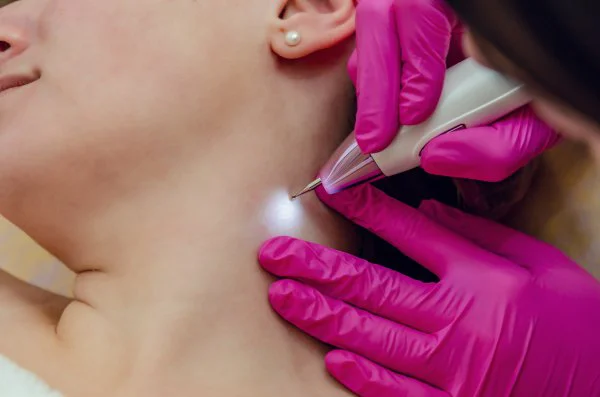
Skin tags that catch, rub, or bleed
Skin tags that are repeatedly exposed to friction are more likely to become irritated.
- Common triggers include clothing seams, jewellery, bras, collars, or shaving.
- Repeated rubbing can cause soreness, redness, or occasional bleeding.
- Bleeding in this context is usually mechanical rather than a warning sign, but it can be distressing.
When irritation is frequent or interferes with daily activities, removal may be considered a practical solution to prevent ongoing discomfort.
Skin tags in sensitive or high-movement areas
The location of a skin tag can strongly influence the appropriateness of removal.
- Areas such as the neck, underarms, groin, eyelids, or under the breasts are more prone to friction and inflammation.
- High-movement areas may increase the likelihood of twisting or catching.
- In sensitive areas, professional assessment is important to ensure accurate diagnosis and appropriate technique.
In these cases, suitability for removal is often determined by the skin tag's behaviour at that site rather than by its size alone.
Skin tag removal is commonly considered when a growth interferes with comfort, clothing, or routine activities. Location and repeated irritation are often more relevant than appearance when assessing suitability.
When Removal May Be Advised For Reassurance Or Assessment
In some situations, skin tag removal is suggested not because the lesion is dangerous, but to provide clarity or reassurance. This usually relates to diagnostic uncertainty rather than a change in medical risk.
When a skin tag does not look typical
Most skin tags have a familiar appearance, but not all skin growths that resemble skin tags are the same.
- Features such as rapid growth, colour change, firmness, or an irregular surface may prompt closer assessment.
- Skin tags can sometimes be confused with moles, warts, or other benign skin lesions.
- Changes do not automatically indicate a serious problem, but they do warrant professional review.
In these cases, removal may be recommended to resolve uncertainty and ensure the lesion has been correctly identified.
Removal for diagnostic confirmation
Occasionally, a clinician may recommend the removal of a skin tag to confirm the diagnosis.
- Removal allows direct examination of the lesion, particularly if its appearance is unclear.
- In selected cases, the tissue may be submitted for laboratory analysis to exclude other conditions.
- This approach is usually precautionary rather than urgent.
For many people, diagnostic confirmation provides reassurance and helps avoid ongoing worry about whether a lesion should be evaluated.
When a skin tag appears unusual or raises concern, removal can be a sensible step to clarify the situation. The aim is reassurance and accuracy, not treatment of disease.
When Skin Tag Removal May Not Be Appropriate
Although skin tag removal is generally straightforward, it is not always necessary or advisable. Understanding when removal offers little benefit, or when it may be better delayed, helps people avoid unnecessary intervention.
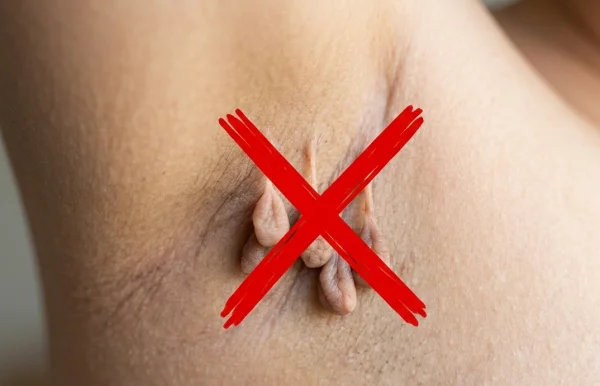
Skin tags are best left alone
Many skin tags are asymptomatic and do not change over time.
- Very small or flat skin tags that are not irritated often do not benefit from removal.
- Skin tags in low-friction areas may remain stable for years without causing problems.
- In some cases, removal may leave a mark that is more noticeable than the skin tag itself.
For these reasons, clinicians may advise monitoring rather than treatment when a skin tag is not causing physical or emotional distress.
Situations where removal should be delayed or avoided
There are circumstances where timing or individual factors make removal less suitable.
- During pregnancy, skin tags may develop or change due to hormonal shifts, and removal is often postponed unless necessary.
- Active skin infection, inflammation, or poor wound healing can increase the risk of complications.
- Certain medical conditions or medications may affect healing and should be discussed before proceeding.
In these situations, delaying removal until conditions are more favourable is usually the safest approach.
Not every skin tag requires treatment, and in some cases, removal may confer little benefit. A cautious approach that considers timing, healing, and overall benefit often leads to better outcomes.
Skin Tone, Scarring, And Cosmetic Outcome Considerations
When deciding whether to remove a skin tag, the cosmetic outcome is often as important as symptom relief. Skin tone, healing response, and individual scarring risk all influence whether removal is likely to feel worthwhile.
Pigment change and healing differences
All skin heals through the same basic processes, but visible outcomes can vary depending on skin tone and treatment method.
- Temporary darkening (hyperpigmentation) or lightening (hypopigmentation) can occur after skin tag removal.
- These changes are more noticeable and sometimes longer-lasting in darker skin tones.
- Certain removal techniques may carry a higher risk of pigmentary change, depending on the location and skin type.
An experienced practitioner will consider skin tone in both technique selection and aftercare advice, to minimise visible change.
Setting realistic cosmetic expectations
Skin tag removal is a minor procedure, but it still involves a healing process.
- A small mark, scab, or flat scar may occur at the site of removal.
- Cosmetic improvement should be weighed against the risk of visible aftereffects, particularly on exposed areas such as the neck or face.
- Removal is often chosen to reduce irritation or concern rather than to achieve a perfect cosmetic result.
Understanding these trade-offs helps prevent disappointment and supports a more balanced decision.
Considering skin tone and healing response is an important part of deciding whether removal is appropriate. For some people, reassurance and comfort outweigh cosmetic concerns, while for others the opposite is true.
Medical Vs Cosmetic Reasons For Skin Tag Removal In The UK
Understanding how skin tag removal is classified within the UK healthcare system can help set realistic expectations. For most people, the distinction between medical and cosmetic care explains why removal is handled in a particular way.
Why skin tag removal is usually cosmetic
In the UK, skin tags are generally regarded as benign lesions that do not pose a health risk.
- Because skin tags are non-cancerous and rarely cause medical complications, removal is not usually considered clinically necessary.
- For this reason, skin tag removal is not routinely funded by the NHS.
- Exceptions are uncommon and typically relate to repeated bleeding, infection, or diagnostic uncertainty.
This classification can feel frustrating, but it reflects how healthcare resources are prioritised rather than a judgement about personal discomfort or concern.
Choosing where and by whom the removal is done
When removal is classified as cosmetic, it is usually performed under private care.
- GPs may assess and reassure, but often do not offer removal unless there is a medical reason.
- Dermatologists and suitably trained aesthetic practitioners may offer removal following assessment.
- Correct diagnosis before removal is essential, particularly if the lesion does not appear typical.
Choosing a practitioner with appropriate training and experience helps ensure that suitability, technique, and aftercare are properly considered.
Deciding Whether Removal Is Right For You
Once medical risk has been excluded, the decision to remove a skin tag is typically a personal one. Taking time to weigh comfort, reassurance, and potential downsides helps people reach a decision that feels proportionate and informed.
Balancing comfort, reassurance, and risk
There is no single right reason to choose skin tag removal, but there are helpful questions to consider.
- Does the skin tag cause ongoing irritation, discomfort, or inconvenience?
- Is uncertainty or worry about the lesion affecting your peace of mind?
- Are you comfortable with the possibility of a small mark or colour change after healing?
For some people, removal offers relief and reassurance. For others, understanding that a skin tag is harmless is enough to decide against treatment.
When to seek professional advice
A professional consultation can be useful even if you are undecided about removal.
- A qualified clinician can confirm whether a lesion is a skin tag and whether removal is appropriate.
- You can discuss technique options, healing expectations, and risks based on your skin type and the location of the skin tag.
- A good consultation should support decision-making, not pressure you into treatment.
Seeking advice is often less about committing to removal and more about gaining clarity.
Conclusion
Skin tags are usually harmless; therefore, suitability for removal is rarely a matter of medical urgency. For most people, it comes down to practical factors such as repeated irritation, an awkward location, or simply wanting clarity that the growth is what it appears to be. It can also help to keep cosmetic considerations in view, including the little but real possibility of a mark or pigment change as the skin heals.
If you are unsure, it is reasonable to pause and monitor, especially when a skin tag is stable and not causing problems. Where there is discomfort, uncertainty about diagnosis, or a sensitive area involved, a professional assessment can provide reassurance and help you understand your options in context.
The next step is to consult a trusted clinical source or discuss suitability with a qualified practitioner who can assess the lesion and discuss risks and expectations based on your skin and medical history.