Introduction
Skin tags are common, harmless skin growths, but deciding whether to remove them can still raise questions. Many people are unsure how the process works, whether removal is painful, how long healing takes, or what the results are likely to look like. Others are uncertain about where removal fits within UK healthcare, or how to judge whether a clinic or practitioner is suitable. This lack of clarity often leads to hesitation rather than informed choice.
Understanding the process is important because skin tag removal is classified as a minor procedure, yet it still requires clinical judgement, appropriate technique, and realistic expectations. A careful approach helps reduce avoidable risks such as unnecessary scarring, pigment changes, or anxiety about normal healing responses. It also facilitates more effective conversations with practitioners, grounded in shared understanding rather than assumptions.
This guide focuses on practical, evidence-aware explanations rather than recommendations. It outlines what typically occurs at each stage, what varies across individuals, and what clinicians consider normal. It also addresses common points of confusion, including recurrence, follow-up, and the rationale for treating removal as a cosmetic decision in the UK. The aim is to help you decide whether this information is relevant to your situation, and how to use it when considering your next step.
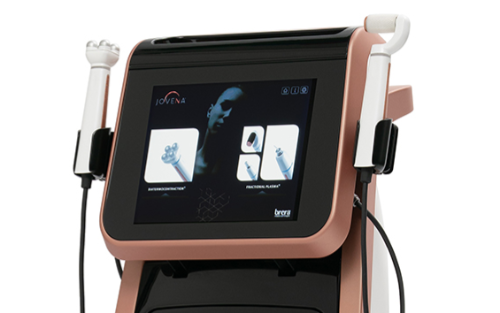
Jovena Fractional Plasma
Skin tag removal may be a straightforward procedure, but how the tissue is treated can make a meaningful difference to both outcomes and patient experience. That’s where fractional plasma technology on the Jovena device offers a more considered approach.
By delivering controlled plasma energy in precise micro-points, the treatment works within the upper layers of the skin to target the concern while leaving surrounding tissue largely unaffected. This supports a natural repair response, encouraging cleaner healing and more refined results over time.
For clinics, Jovena provides a versatile platform that extends beyond simple lesion removal into broader skin renewal and resurfacing treatments. For patients, it offers a precise, controlled option that aligns removal with overall skin quality - not just resolution of the concern.
Visit Website
Before Anything Happens: The Initial Consultation
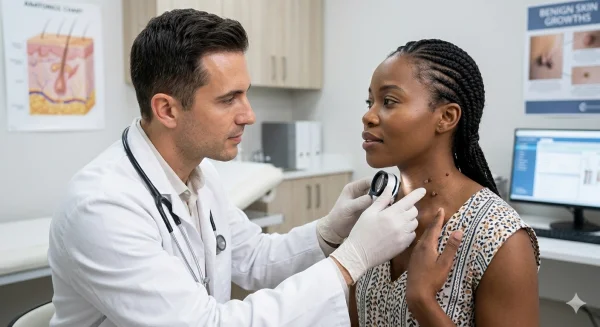
Before any skin tag removal, the process begins with a consultation. This appointment is designed to confirm that the lesion is suitable for removal and to explain the skin tag removal process clearly and in a measured manner.
Why a consultation is not a formality
A consultation is not simply an administrative step. It allows a qualified practitioner to properly assess skin growth before recommending removal.
- Not all skin growths are skin tags, and some should not be removed without further investigation.
- Visual assessment helps exclude other benign lesions, such as moles or warts, that may require a different approach.
- The consultation ensures removal is appropriate, safe, and aligned with the individual’s skin and health profile.
This step protects patient safety and avoids unnecessary or unsuitable treatment.
What the practitioner is assessing
During the consultation, the practitioner considers several practical and clinical factors that influence whether and how removal should proceed.
- The size, shape, and base of the skin tag, including whether it is narrow or broad-based.
- The location of the skin tag, as areas such as eyelids, the groin, or areas of friction, may need extra care.
- Skin tone and healing tendencies, particularly where pigment changes may be more noticeable.
- Whether there are multiple skin tags can affect treatment planning and appointment length.
This assessment helps determine the most appropriate removal method and sets realistic expectations.
Consent, expectations, and questions
The consultation also provides space for discussion and informed consent.
- The practitioner should explain what removal involves, possible risks, and typical healing timelines in plain language.
- Consent is confirmed only once the individual understands the procedure and feels comfortable proceeding.
- Patients are encouraged to ask questions, including what to expect afterwards and when follow-up may be needed.
Clear expectations at this stage reduce uncertainty later in the process.
The initial consultation establishes whether removal is suitable and ensures decisions are based on clinical judgement rather than assumption. It sets the foundation for a safe, predictable experience.
On The Day: What A Skin Tag Removal Appointment Is Like
Once suitability has been confirmed, the removal appointment itself is usually straightforward. Knowing what typically happens on the day helps reduce uncertainty and allows people to arrive feeling prepared rather than apprehensive.
Setting and preparation
Skin tag removal is typically performed in a clinical treatment room rather than in a hospital setting.
- The environment should be clean, well-lit, and set up for minor procedures.
- No special preparation is usually required, although patients may be advised to avoid applying creams, makeup, or oils to the area on the day.
- Clothing choices can matter, especially if the skin tag is in an area that may need to be easily accessed without friction afterwards.
This part of the appointment is designed to be calm and efficient, not rushed.
Pain management and anaesthetic use
Pain control depends on the size, location, and number of skin tags being treated.
- Small skin tags with a narrow base may be removed without anaesthetic, with sensations often described as brief and tolerable.
- Local anaesthetic is commonly used for larger skin tags or sensitive areas to minimise discomfort.
- The practitioner should explain what sensations to expect, such as pressure or warmth, rather than pain.
Clear communication at this stage helps manage expectations and reduces anxiety.
Length of the appointment
Most skin tag removal appointments are relatively short, but timing can vary.
- Single skin tags are often treated within a brief appointment.
- Multiple skin tags, particularly those in delicate areas, may require more time for careful assessment and post-procedural advice.
- Appointments also include time for questions, consent confirmation, and post-treatment guidance.
Allowing sufficient time ensures that the procedure is carried out safely and without undue pressure.
The removal appointment is typically simple and clinic-based, with pain management and timing tailored to the individual rather than a fixed template.
During The Procedure: What Actually Happens
The removal itself is usually brief and controlled. Understanding the basic steps involved helps reduce uncertainty and keeps the focus on safety and precision rather than on the procedure itself.

Step-by-step overview without technical detail
Although techniques vary, the overall process follows a predictable pattern.
- The area is cleaned to reduce the risk of infection.
- If required, a local anaesthetic is applied and allowed time to take effect.
- The skin tag is removed using a method chosen during the consultation, based on its size and location.
- Care is taken to minimise disruption to the surrounding skin.
The emphasis throughout is on accuracy rather than speed.
Bleeding control and immediate care
Minor bleeding can occur during skin tag removal and is expected rather than unusual.
- Bleeding is usually minimal and controlled immediately during the procedure.
- In some cases, techniques are employed to seal the area during removal.
- Once removal is complete, the practitioner assesses the site before proceeding to aftercare instructions.
These steps are routine and part of standard clinical practice for minor skin procedures.
During the procedure, the focus is on controlled removal and immediate care of the area. For most people, this stage is quicker and less complex than they anticipate.
Immediately After: The First 24 To 48 Hours
What happens straight after skin tag removal is usually simple, but it plays an important role in healing. Clear guidance at this stage helps people feel confident about caring for the area once they leave the clinic.
How the area is protected
After removal, the practitioner will assess the site and advise whether any covering is required.
- Some areas remain uncovered, particularly when the skin tag is small.
- A light dressing or protective layer may be used if there is a risk of friction from clothing.
- Patients are usually advised to keep the area clean and dry for the first day or two.
These steps are precautionary and intended to support normal healing.
Sensations to expect
Most people notice mild, short-lived sensations after removal.
- Slight tenderness, redness, or warmth around the area is common in the first 24 hours.
- A small scab may form as part of the normal healing process.
- Increasing pain, swelling, or discharge is atypical and should be evaluated.
Clear guidance on expectations helps distinguish normal healing from signs that require attention.
The first 24 to 48 hours are usually uneventful, with simple care measures supporting the body’s natural healing response.
Healing Over Time: Days, Weeks, And Skin Changes
Healing after skin tag removal happens gradually and varies between individuals. Understanding the typical stages helps set realistic expectations and reduces concern about normal skin changes during recovery.
Typical healing timelines
Most skin tags heal without complications, but timing depends on the location and the individual's skin response.
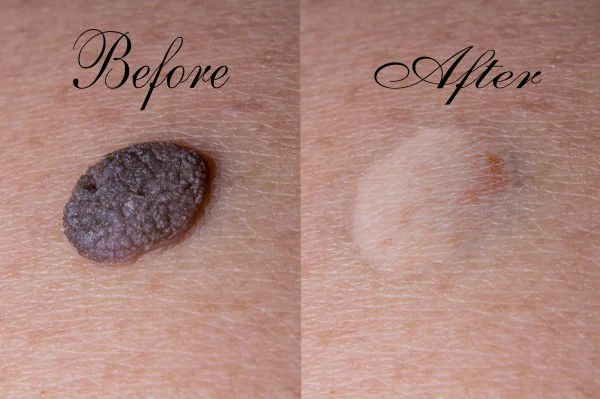
- In the first few days, a small scab or dry area may form as the skin closes.
- Over one to two weeks, the scab usually sheds naturally, revealing new skin underneath.
- Areas exposed to friction, such as the neck or under the arms, may take slightly longer to settle.
Healing on the face often appears to progress more quickly, whereas areas subject to movement or moisture may require more time.
Skin colour changes and texture
Temporary changes in skin appearance are common and usually improve with time.
- The healed area may initially appear pink or lighter than the surrounding skin.
- In some skin tones, darker areas can develop before gradually fading.
- Texture usually smooths as the skin remodels, although subtle differences can persist for a period.
These changes reflect normal healing rather than a problem with the removal itself.
Factors that influence healing
Several practical factors affect how quickly and evenly the skin recovers.
- Skin tone and individual healing tendency influence colour changes.
- Location matters, particularly in areas of friction or repeated movement.
- Following aftercare advice reduces the risk of irritation or delayed healing.
Understanding these influences helps explain why healing can look different from person to person.
Healing after skin tag removal is usually straightforward but not instant. Gradual improvement over weeks is expected, with most changes resolving naturally
Results And Outcomes: What Is Reasonable To Expect
Once healing is underway, attention often shifts to how the area looks and feels. Understanding what is considered a typical outcome helps frame results in a realistic, clinical context rather than an idealised one.
What success looks like clinically
From a clinical perspective, successful skin tag removal is defined by safe healing rather than cosmetic perfection.
- The area should heal flat, without ongoing redness, pain, or signs of infection.
- Any initial colour change should gradually settle as the skin remodels.
- Surrounding skin should remain intact, with no widening of the treated area.
In most cases, the goal is the removal of the skin tag itself, not the alteration of the surrounding skin.
Managing expectations around appearance
It is important to understand what skin tag removal can and cannot achieve.
- Skin texture may appear slightly different during early healing and typically improves over time.
- Small marks or pigment changes can occur, particularly in areas prone to friction or in darker skin tones.
- Removal does not prevent new skin tags from forming elsewhere in the future.
Clear expectations help avoid unnecessary concern and support informed satisfaction with the outcome.
Reasonable outcomes prioritise safe removal and natural healing over immediate or flawless cosmetic results. Most changes continue to improve gradually over weeks.
Follow-Up And When To Seek Advice
For most people, skin tag removal does not require ongoing medical follow-up. However, knowing when review is helpful and when it is not supports confidence once healing is underway.
Routine follow-up
Formal follow-up appointments are not always necessary after uncomplicated skin tag removal.
- Many clinics advise follow-up only if the area does not heal as expected.
- Follow-up may be recommended after multiple skin tags are removed or when treatment involves sensitive areas, such as the eyelids.
- Some people choose a review appointment for reassurance, particularly if they are prone to slower healing.
The approach varies by clinic and by individual circumstances, rather than being fixed.
Signs that should be reviewed
While complications are uncommon, certain changes should be checked by a professional.
- Increasing pain, redness, swelling, or warmth after the first few days.
- Persistent bleeding or discharge from the area.
- Delayed healing or a wound that does not gradually improve.
These signs do not usually indicate serious problems, but early review allows timely advice or simple intervention if needed.
Most people heal without needing further appointments, but knowing what falls outside normal healing provides reassurance rather than uncertainty.
Do Skin Tags Come Back After Removal?
It is common to wonder whether removing a skin tag prevents future ones from appearing. This section explains the difference between recurrence and new skin tags, and how clinicians frame this discussion during consultation.
Recurrence versus new skin tags
A fully removed skin tag typically does not regrow in the same location.
- When a skin tag is treated properly, the original lesion is gone.
- New skin tags can develop in nearby or different areas over time, particularly in areas of friction.
- These new growths are not considered a recurrence of the original skin tag.
Understanding this distinction helps avoid the assumption that removal has failed.
Why new skin tags may still develop
Skin tag removal addresses existing lesions but does not change underlying tendencies.
- Factors such as skin friction, age, weight changes, and hormonal shifts can influence the formation of new skin tags.
- Some people are simply more prone to developing skin tags than others.
- Removal is therefore a local solution, not a preventative treatment.
This explanation is usually part of setting realistic expectations rather than discouraging treatment.
What clinicians consider normal over time
From a clinical perspective, new skin tags are expected in some individuals.
- Repeat treatment is common and not a sign of a problem.
- Many people choose removal only when skin tags become bothersome, rather than treating every new one.
- Decisions are often revisited over time rather than made once.
This approach supports flexibility and informed choice rather than a fixed treatment plan.
Skin tags typically do not recur after removal, but new ones can develop elsewhere. Removal is best understood as addressing current concerns rather than altering long-term skin behaviour.
Conclusion
Skin tag removal is a straightforward process for most people, but understanding each stage helps place it in the proper context. From consultation and assessment through to healing and longer-term expectations, the emphasis is on suitability, safety, and realistic outcomes rather than speed or cosmetic perfection. A professional approach ensures that removal is appropriate, that the method is carefully selected, and that healing is supported in a manner that respects individual skin differences.
It is also important to note that removal addresses only existing skin tags. New skin tags can develop over time; this is considered a normal variant rather than a complication or treatment failure. Clear explanations of healing, follow-up, and recurrence enable decisions to be made without undue concern or pressure.
If you are considering skin tag removal, taking time to reflect on what you have learned is a sensible next step. Some people consult trusted medical sources, while others prefer to discuss their individual situation with a qualified practitioner. Either approach supports informed, confident decision-making based on clarity rather than urgency.